


Lower Back Tightness After Sitting: What May Help
Lower-back tightness after sitting can have more than one cause. The psoas and iliacus are nearby hip flexors, but a tight feeling does not prove either muscle is involved. Movement, desk setup, sleep, stress, and many other factors may matter. This guide explains cautious comfort options.
In This Article
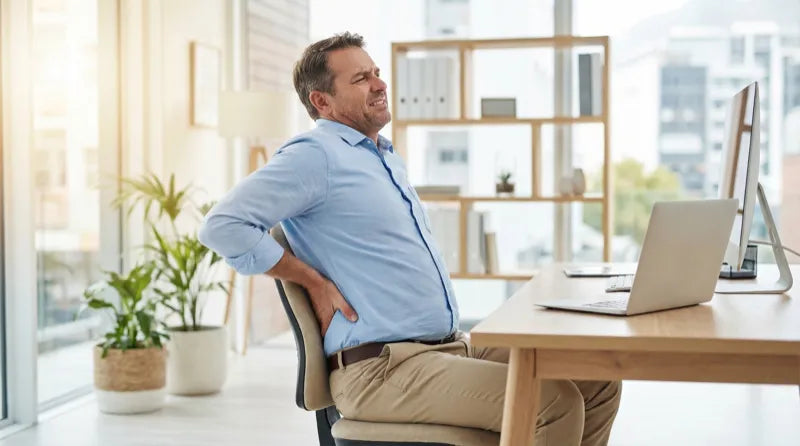 The instinct is to work on the back. If tightness keeps returning after sitting, the front of the hips is worth checking too.
Your Back May Not Be Where It Starts
You sit for a long work block and notice that your lower back feels tight. You stand, stretch, or roll your shoulders. The feeling may change, or it may not.
Sound familiar?
The instinct is to go after the back. Stretch it. Rub it. Maybe see a chiropractor. Those can help in the moment. But if the lower back tightness comes back day after day, it is worth looking at the whole picture — including a spot many routines skip: the front of the hips.
The Hip Flexor Connection
Sitting bends the hips. The psoas and iliacus help move the hips, along with several other muscles.
Some people feel stiff after staying in one position. That does not prove the hip flexors have shortened or caused a back symptom.
Here is the anatomy worth knowing. The psoas attaches along the lower spine. The iliacus lines the inside of the hip bone. The lower back and the front of the hips are close neighbors, and after long sitting some people notice:
- A back that feels tired by late afternoon — the day's stillness adds up
- A front of the hip that feels short when standing — especially right after getting up
- Stiff first steps — that ease once the body gets moving
Feelings like these can have several causes, and no article can sort out yours. This is one common pattern — not a diagnosis.
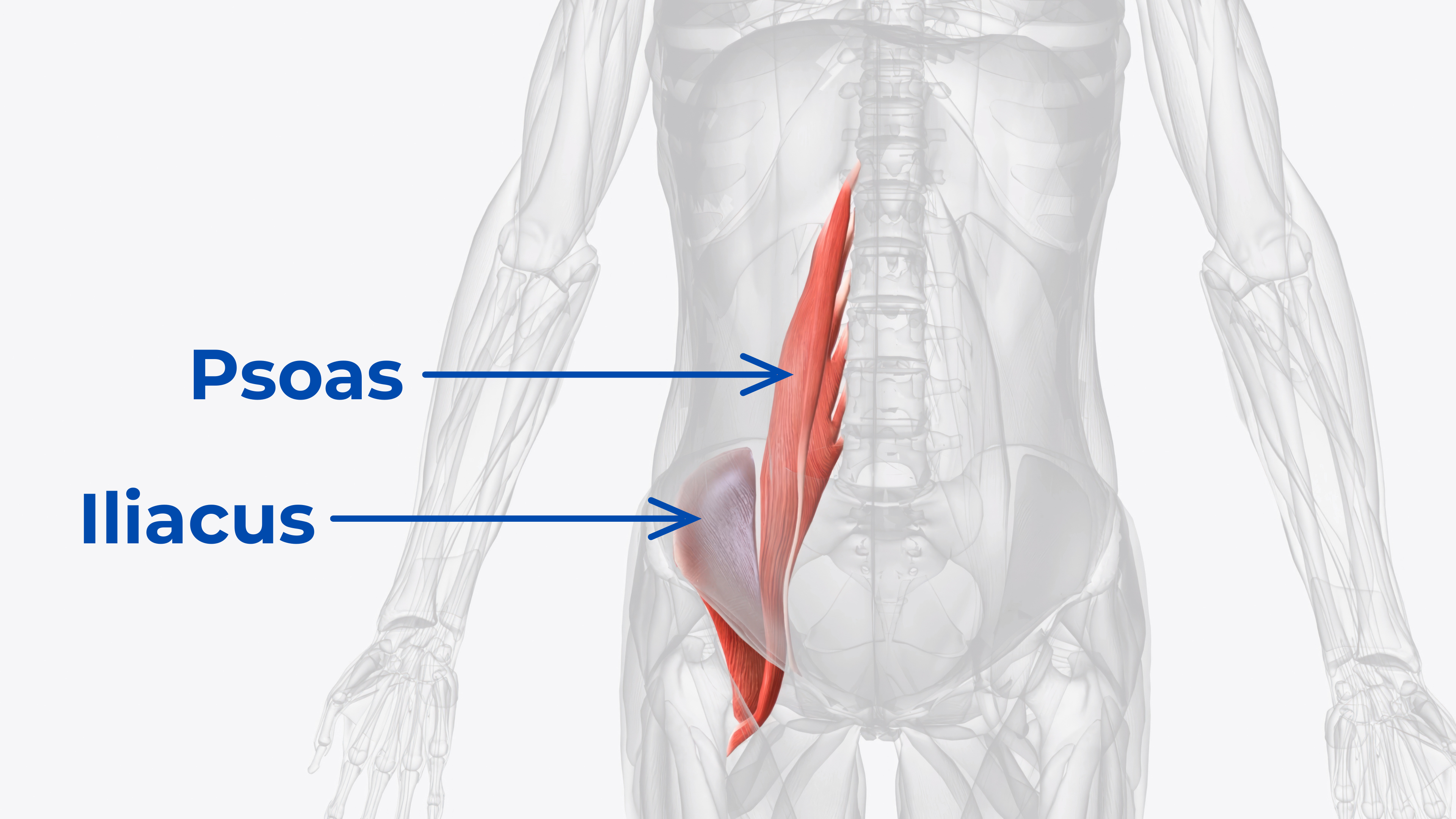 The psoas attaches along the lower spine. The iliacus lines the inside of the hip bone. They join near the top of the thigh bone.
Where Common Approaches Fit
Stretching: A gentle kneeling lunge can feel good and open up range. It fits best as part of a moving day — paired with breaks, not instead of them.
Foam rolling: A roller gives broad pressure to easy-to-reach areas such as the thighs. Do not roll the belly or inside rim of the hip bone to hunt for a deep muscle.
Back massage: Some people find massage comfortable. It does not identify the cause of back tightness.
Ergonomic chairs: A supportive chair may improve comfort. No chair is a treatment for every back symptom.
Simple Habits That May Help
No single fix suits everyone. Movement, setup, sleep, and stress all shape how a back feels. For the hip-flexor piece:
1. Try comfortable movement
Easy walking, changing position, or a gentle hip stretch may feel good. Deep belly or inner-rim pressure is not a do-it-yourself move.
2. Stretch when it feels good
A gentle kneeling lunge is one option. Keep the range comfortable and stop if it causes pain. There is no required order.
3. Move throughout the day
Change position when it fits your day. There is no required timer or movement schedule.
4. Address the neck too
Desk workers may also notice neck discomfort. That does not prove one posture or muscle caused it. Keep neck movement gentle and seek care for persistent symptoms.
A Simple Desk-Day Routine
For a desk day, choose a few options that fit your comfort and schedule:
- Before work: adjust the chair and screen so you feel supported.
- During work: change position, stand, or walk when comfortable.
- After work: try an easy walk or stretch if it feels good.
These are choices, not a promised treatment. Stop any movement that makes symptoms worse.
The Bottom Line
Lower-back tightness can involve many factors. The nearby psoas and iliacus are useful anatomy to know, but an article cannot say whether they are part of your symptoms.
Comfortable movement, gentle stretching, and a supportive desk setup are options to try. Persistent or worsening symptoms deserve an assessment.
Frequently Asked Questions
Staying in one position may feel stiff, but that does not prove the psoas, iliacus, or another single tissue caused the feeling. Sleep, stress, activity, injury, and other factors may matter.
A gentle stretch may feel comfortable for some people. Stop if it hurts. If tightness keeps returning, get the whole picture checked.
Keep it simple and gentle: regular movement breaks, easy hip flexor stretches, and light self-massage near the front of the hip if you like it. Nothing deep, nothing forced. If tightness persists or worsens, get it checked.
A standing desk gives you another position and may improve comfort. Alternate positions as comfortable. No single piece of furniture treats every back symptom.
There is no reliable timeline or promised result. Persistent, strong, or worsening symptoms deserve a professional assessment.
The psoas starts on the lower spine. The iliacus starts on the inside of the hip bone. They join into one shared tendon down to the thigh bone, which is why they are called the iliopsoas. They sit in different places — one along the spine, one lining the hip bone — but they work as a single unit.
Nexus Health Tools publishes plain-language guides about hips, posture, and everyday movement.