


Hip Flexor Tightness: What Foam Rolling Can and Can't Do
Foam rollers apply broad pressure and are often used on areas such as the thighs and calves. The psoas and iliacus sit deep in the body, so a roller cannot tell whether either muscle is causing a tight feeling. This guide explains what rolling can and cannot show, plus safer comfort options.
In This Article
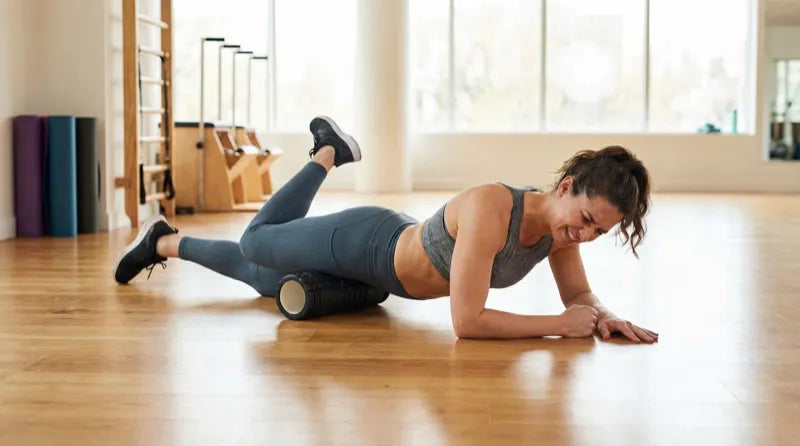 Foam rollers suit surface muscles like quads and hamstrings. The deepest hip flexors sit further in.
Foam Rolling Works — For the Right Muscles
Foam rollers give broad pressure. People often use them on the quads, hamstrings, calves, and upper back. The IT band is connective tissue, not a muscle.
But hip flexor tightness is a different story.
The deepest hip flexors are the psoas and the iliacus, and both sit far inside the body. The psoas runs along the front of the lower spine, behind the belly organs. The iliacus lines the inside of the hip bone. Neither sits near the surface, where a roller does its work.
A roller may change how nearby surface tissue feels, but that response cannot identify a deep muscle or diagnose the cause of tightness.
Why Depth Matters
A foam roller presses a wide area of tissue between the roller and the floor. That makes it better suited to broad, easy-to-reach areas such as the thigh.
The psoas sits deep in the trunk near organs, nerves, and blood vessels. Do not roll or press into the belly in an attempt to reach it.
The iliacus lines the inside of the hip bone. Do not place hard pressure inside that rim on your own.
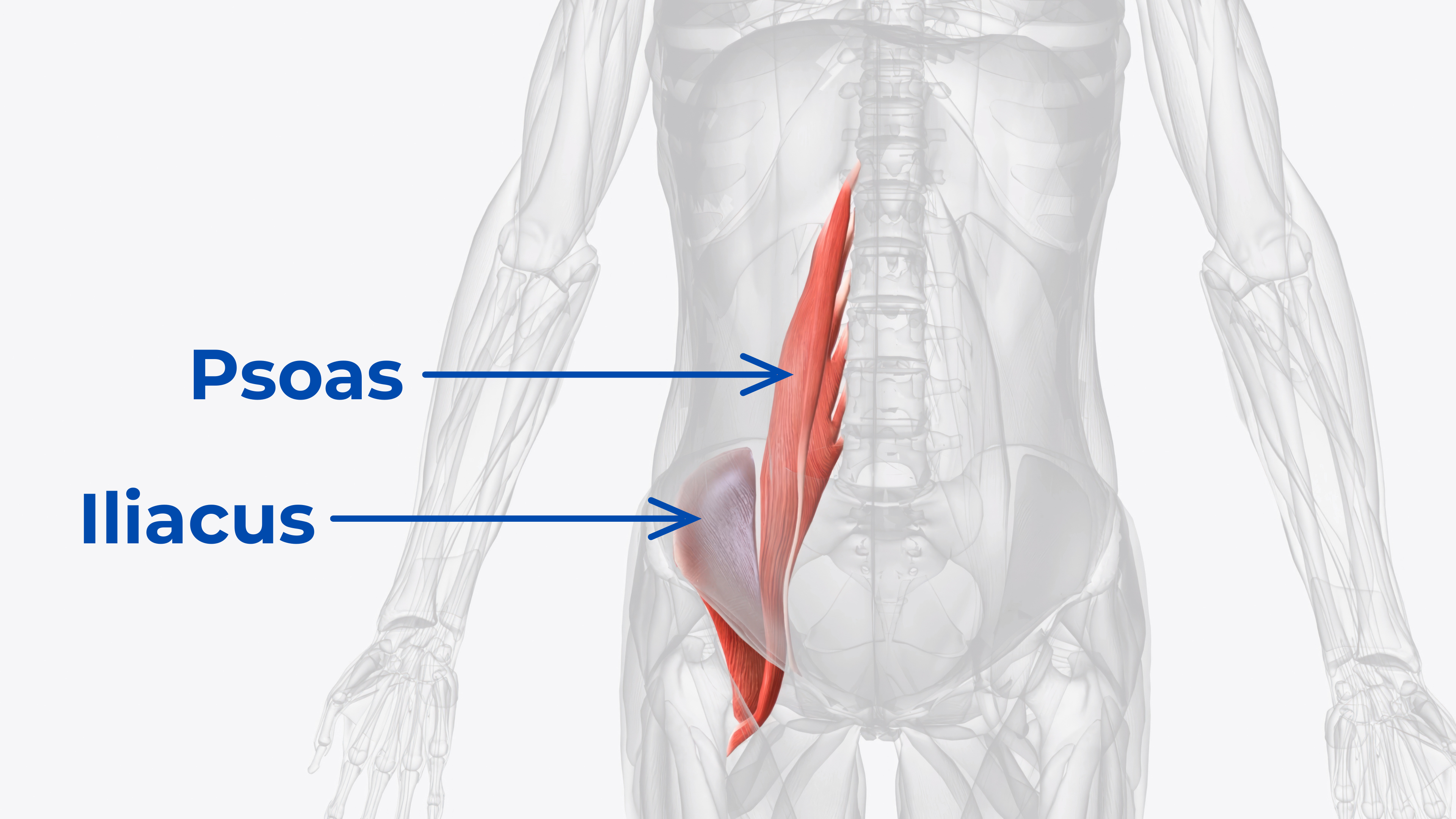 The psoas runs along the lumbar spine behind the organs. The iliacus lines the inside of the hip bone. Both sit deep beneath the surface.
What About Lacrosse Balls?
A hard ball places force on a small spot. That can be too intense near the belly or inner edge of the hip bone.
Do not lie on a ball to hunt for the psoas. A ball cannot confirm which tissue it is pressing, and the area contains sensitive structures.
If you use a ball on an easy-to-reach surface muscle, keep it light and stop if anything feels sharp, tingling, or spreading.
What Helps the Deep Hip Flexors
Gentle movement or an easy stretch may feel comfortable. Avoid deep belly and inner-rim pressure. If symptoms persist, worsen, or follow an injury, ask a clinician to assess them.
The Role of Stretching
A gentle kneeling lunge may feel comfortable at the front of the hip. It does not show which muscle is involved or promise a change in range.
You may also try walking or changing position. There is no required order or schedule.
A Better Approach to Hip Flexor Tightness
For a tight feeling without an injury, these gentle options are reasonable:
- Move more often — short breaks, walks, and position changes through the day
- Stretch gently — a kneeling hip flexor stretch with the pelvis tucked, within comfort
- Add light self-care if you like it — easy self-massage near the front of the hip, kept light
- Get help if the feeling persists, worsens, or limits normal activity
Do not hunt for one “magic spot.” A symptom cannot identify the psoas, iliacus, or any other single structure.
The Bottom Line
Foam rollers are great tools for the right muscles. The psoas and the iliacus simply sit much deeper — rolling mostly works the tissue above them.
Hard balls create concentrated pressure and should not be used to dig into the belly or inner rim of the hip bone.
Try comfortable movement or stretching, and seek an assessment when symptoms persist. The psoas and iliacus are only two of many possible parts of the picture.
Frequently Asked Questions
The psoas sits deep near organs, nerves, and blood vessels. A roller gives broad surface pressure and cannot confirm that it is changing the psoas. Do not roll the belly to try to reach it.
A gentle kneeling stretch, an easy walk, or a comfortable rest position may feel good. None can confirm that the psoas is the source of a symptom.
You may use a roller gently on easy-to-reach surface areas if it feels comfortable. Do not roll directly on the IT band as though it were a muscle, and do not roll the belly or inner rim of the hip bone.
The psoas starts on the lower spine and runs deep through the belly. The iliacus starts on the inside face of the hip bone. They join at the same spot on the thigh bone and work together to lift the hip. They sit in different places — one deep in the belly, one lining the hip bone — which is why they get described separately.
There is no proven best order. Many people like gentle movement first and stretching after, once the body feels warm. Do what feels comfortable and repeatable.
There is no proven schedule. Short, gentle attention as part of a regular routine suits many people who sit a lot. Let comfort guide how often — and if tightness keeps returning or hurts, get it checked.

Nexus Health Tools publishes plain-language guides about hips, posture, and everyday movement.
This article is for learning only and is not medical advice. If symptoms stick around, see a qualified provider.