


Psoas Pain: A Plain-English Anatomy Guide

📖 In This Article
Some people notice the front of the hips feels stiff after sitting.
The psoas and iliacus are two deep muscles in this area. They help flex the hip, but they are not the only tissues that can affect how the front of the hip feels.
A tight feeling after sitting does not prove that a muscle is short or identify the cause. Gentle movement may feel comfortable; persistent or unusual symptoms deserve an assessment.
What Psoas Pain Can Feel Like
People use the phrase for different feelings. Examples include:
- ✓ Stiff hips after you stand up from a chair
- ✓ Less give in the hip when you walk
- ✓ A strong pull at the front of the hips
- ✓ Posture that feels stuck in a bent-hip shape
- ✓ Stretching feels good, but the tight feeling comes back
- ✓ The body loosens up when you move, but not when you sit
These examples do not diagnose psoas pain. Where it hurts cannot prove which muscle or tissue is involved. Strong, lasting, or unusual symptoms deserve a professional look.
A useful place to start is basic anatomy and the fact that symptoms can have more than one cause.
The Two Muscles Behind the Front of the Hip
They are the psoas (say SO-az) and the iliacus. Together they form the iliopsoas, one part of the hip flexor group.
The psoas runs from the lower spine to the top of the thigh bone. The iliacus lines the inside of the pelvis and joins the psoas near the top of the thigh bone. Together they help lift the thigh and work with other trunk and hip muscles.
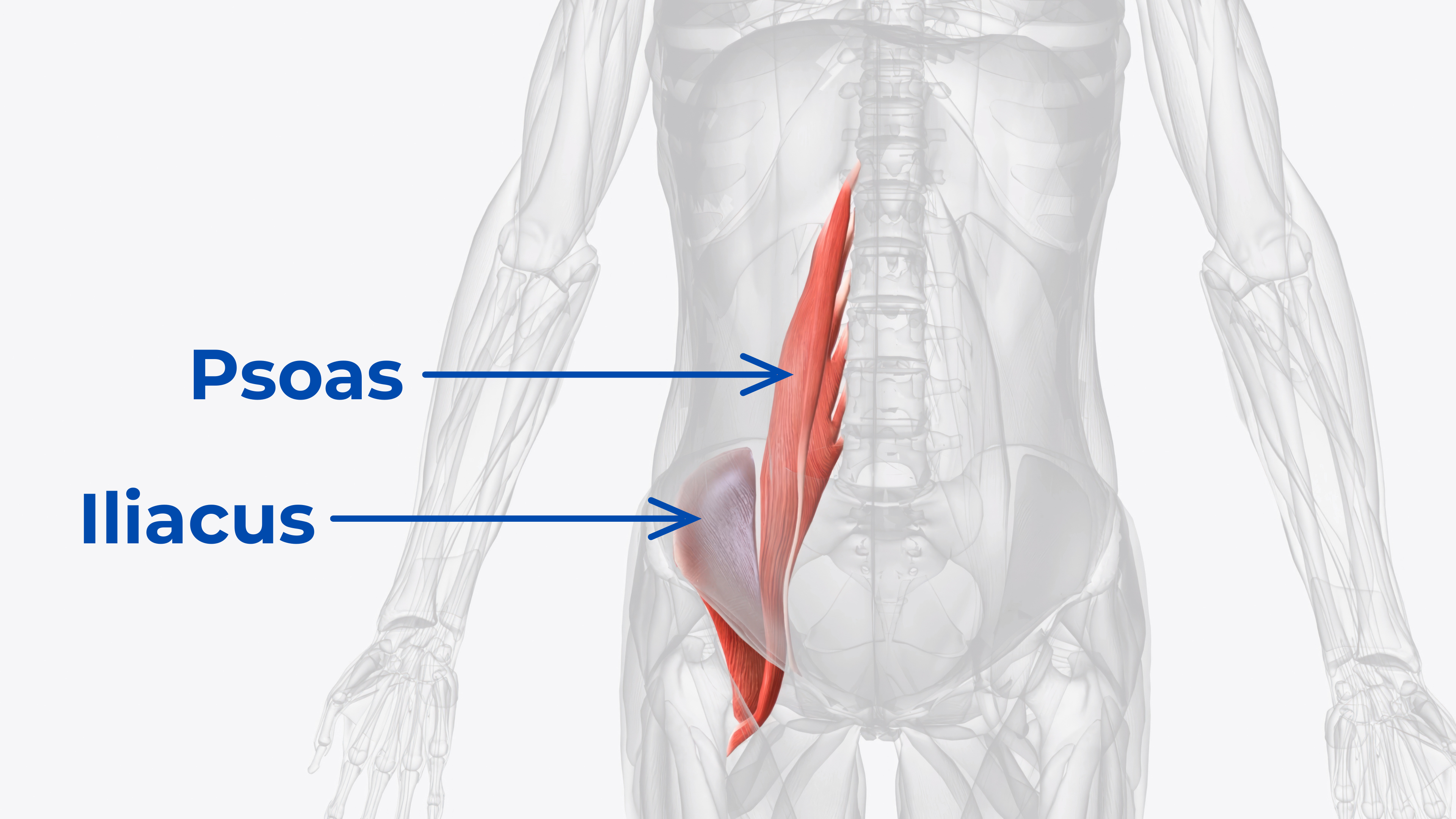 The psoas runs from the lower spine to the femur. The iliacus lines the inside of the hip bone and joins the same tendon near the femur.
When these muscles move well, you rarely notice them. After long sitting, some people notice:
- the front of the hips feels tight
- standing fully tall feels less natural for a moment
- the first steps feel stiff until the body warms up
What Long Sitting Can Change
After sitting, some people notice a few temporary feelings:
Stiff first steps. Standing and walking may feel less comfortable at first.
A tight-feeling front hip. This feeling does not prove that a muscle has shortened.
A change with movement. Gentle walking or a position change may feel comfortable, but the response does not diagnose the cause.
Feelings like these have more than one possible cause. This is one common pattern, not a diagnosis — and anything strong, lasting, or unusual belongs with a clinician.
Where Stretching Fits
Stretching can help. Walking can help. General movement can help.
On their own, though, they are single pieces of a bigger picture. A tight-feeling front hip usually reflects the whole day — sitting time, movement habits, and strength all play a part.
If tightness keeps returning after a fair try at moving more, or if anything hurts, that is a pattern worth showing to a clinician rather than stretching harder.
Two Muscles, One Unit
The psoas has a quieter partner.
Many people have heard of the psoas. Far fewer know the iliacus. The two work as a pair — so closely that anatomy treats them as one unit, the iliopsoas.
Knowing both exist makes the front of the hip easier to understand:
- the psoas links the lower spine, the pelvis, and the thigh bone
- the iliacus covers the inside front of the pelvis and joins that same spot
- both help flex the hip, along with several other muscles
Frequently Asked Questions
They form the iliopsoas and help flex the hip. The psoas begins at the lower spine, while the iliacus begins inside the pelvis. Several other muscles also help move the hip.
It is an informal phrase, not a medical procedure or proof that the psoas needs to be “released.” Gentle movement may feel comfortable. Deep belly pressure is not a do-it-yourself move.
The psoas and iliacus are both hip flexors in the same area. People may use different names for front-of-hip symptoms, but the words do not identify the cause.
The psoas sits deep in the belly, so a roller mostly works the surface tissue above it. Rolling nearby can still feel good. Gentle movement, easy stretching, and light care are the usual starting points for this area.
Because they work as a pair and meet at the same spot on the thigh bone. Anatomy treats them as one unit — the iliopsoas. Knowing both exist makes the front of the hip easier to understand.
No. This article is for learning only. See a doctor for bad symptoms, a recent injury, or pain that will not go away.

Nexus Health Tools publishes plain-language guides about hips, posture, and everyday movement.