The Two Muscles Nobody Talks About: Your Psoas and Iliacus (And Why They Control More Than You Think)

At a Glance
The psoas and iliacus are two deep muscles that work together as your primary hip flexor — influencing hip flexion, spinal stability, posture, and even breathing. Sitting for long stretches keeps them shortened, which can contribute to lower-back tightness, a forward-tilted pelvis, and underactive glutes. Because they attach to different structures (spine vs. pelvis), each responds best to its own targeted release work. Most people have never heard of them — and that’s why the tightness tends to keep coming back.

In This Article

AI-generated (Nano Banana Pro) — professional woman at standing desk with lower back discomfort, a forward-tilted pelvis visible → uploaded as article-pp09-hero.webp
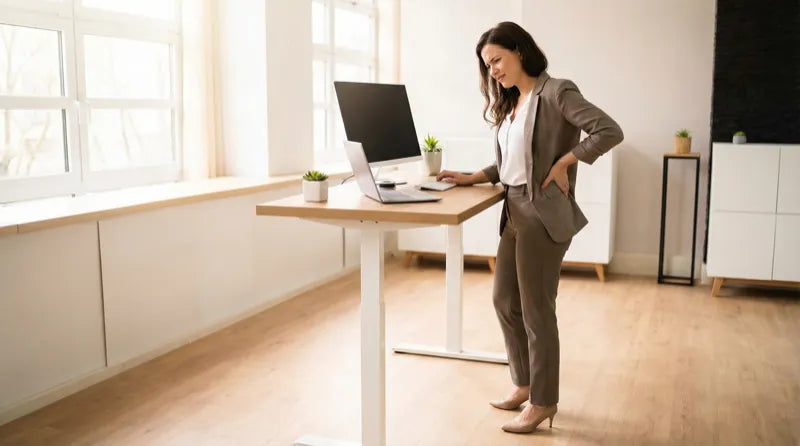
Professional woman at a standing desk pressing her lower back in discomfort — tight psoas and iliacus muscles are often linked with recurring lower-back tightness Two muscles you’ve probably never heard of are shaping your posture, your mobility, and how your hips feel right now.

The Hidden Muscles Running the Show

There are two muscles shaping posture, back tightness, hip mobility, breathing, and even the stress response right now — and most people have never heard either of their names.

They’re called the psoas (pronounced “SO-az”) and the iliacus. Together, they form the iliopsoas complex — the body’s primary hip flexor group. And for anyone dealing with recurring lower-back tightness, tight hips, or that frustrating stiffness that keeps coming back no matter how much stretching happens — these two muscles are almost certainly involved.

Neither one gets discussed in most fitness content. They rarely come up in conversation. Gym trainers may not know how to assess them. But physical therapists, osteopaths, and movement specialists have known about their importance for decades — and more critically, have known that both work best when addressed together.

The Only Muscle Connecting Spine to Legs The psoas major is the only muscle in the human body that directly connects the lumbar spine to the lower extremities — which is why tension here can be felt in more than one place.

Where They Are (And Why You Can’t Feel Them)

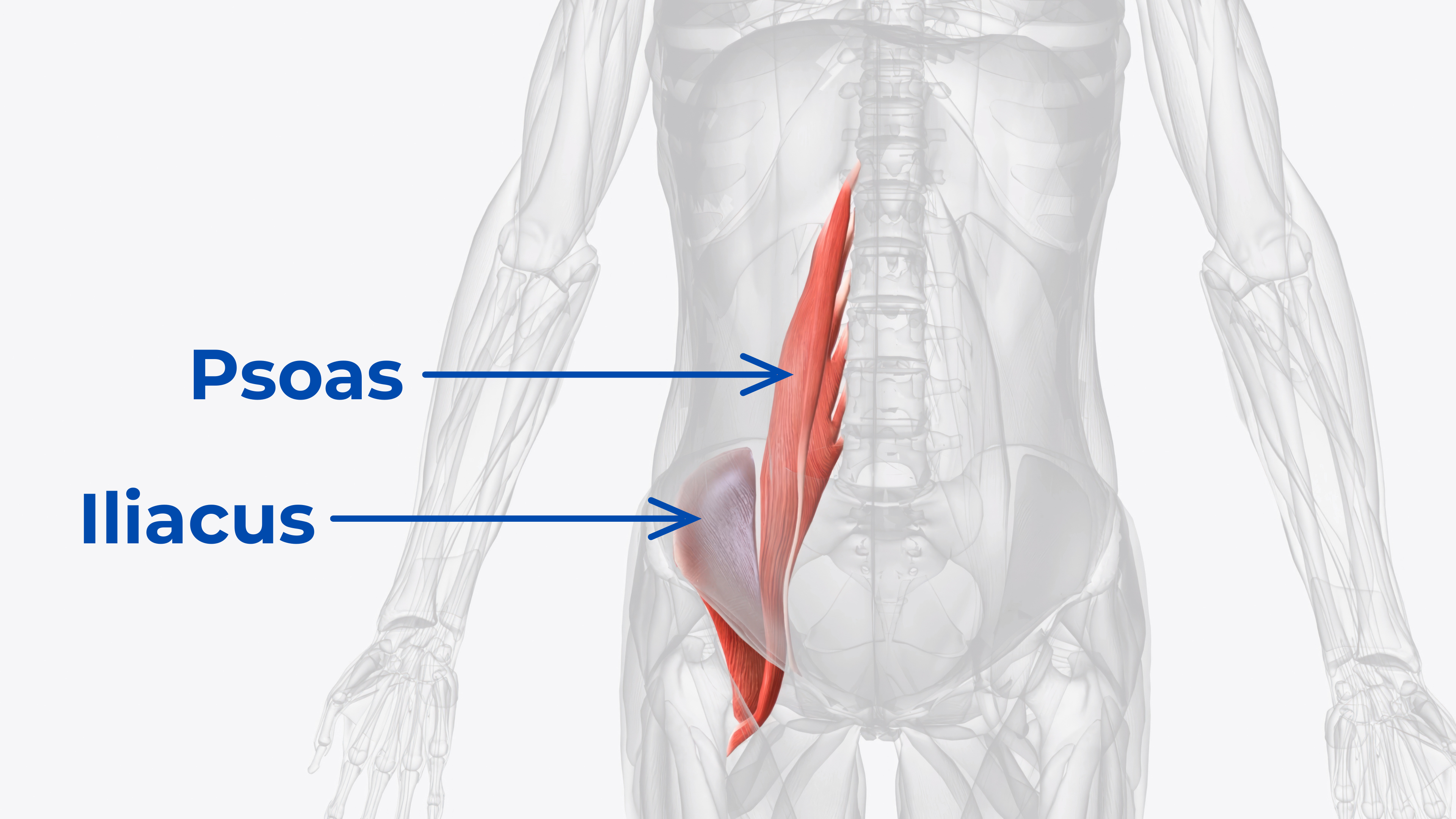
The psoas major is a long, thick muscle that runs from the front of the lower spine — specifically the vertebral bodies and transverse processes of T12 through L5 — down through the pelvis and attaches to the lesser trochanter of the femur (a bony bump near the top of the thigh bone).

It cannot be felt by pressing on the back. It sits deep inside the core, right against the lumbar spine, behind the abdominal organs. It can be accessed from the front, by pressing gently inward through the abdomen beside the navel — but most people don’t know it’s there.

Shared educational asset — psoas/iliacus anatomy diagram (CDN)
Anatomy diagram showing the psoas running from the lumbar spine through the pelvis, and the iliacus lining the inside of the hip bone The psoas connects spine to leg. The iliacus lines the inside of the hip bone. Together, they form the body’s primary hip flexor complex.

The iliacus originates from the inner surface of the iliac fossa (the inside of the hip bone) and joins the psoas to attach at the same point on the femur. Together, they form the iliopsoas complex — often discussed as one functional unit, but structurally and functionally distinct in ways that matter for release work.

What They Do

The psoas has four primary functions:

1. Hip Flexion

It’s the strongest hip flexor in the body. Every time a knee is lifted — walking, climbing stairs, running, getting out of a chair — the psoas initiates the movement.

2. Lumbar Spine Stabilization

Because it attaches to every lumbar vertebra, the psoas acts as a deep stabilizer of the lower spine. It keeps the lumbar curve in its natural alignment. When healthy, this is a feature. When shortened from long sitting, it can pull the spine into an exaggerated arch.

3. Spinal Rotation and Lateral Flexion

The psoas assists in rotating and side-bending the trunk. It’s active in movements like twisting to reach something behind you or bending to pick something up from the side.

4. Postural Maintenance

The psoas is active during upright standing — it’s one of the muscles that prevents the body from collapsing forward. It works constantly, below conscious awareness, as part of the postural system.

Some researchers also connect the psoas to the diaphragm — they share fascial connections at the T12 level, which is why ongoing psoas tension can affect breathing patterns. Shallow or restricted breathing, particularly when sitting, may have psoas tension as a contributing factor.

The Iliacus: The Forgotten Half

Most discussions about the psoas ignore the iliacus entirely — or lump them together as “the hip flexors.” But the iliacus matters independently, and here’s why:

The critical distinction: The psoas attaches to the spine. The iliacus attaches to the pelvis. This means they can be tight independently of each other, and each responds best to its own targeted release work. Standard hip-flexor stretches lengthen both muscles together but can’t apply the specific, targeted pressure each one needs individually.

A tight psoas with a relatively mobile iliacus is possible, and vice versa. Because they attach to different structures, they contribute different pieces of the pattern. Working on one without the other leaves half the tension in place.

Feature Psoas Iliacus
Origin Lumbar spine (T12–L5) Inside of hip bone (iliac fossa)
Insertion Lesser trochanter of femur Lesser trochanter of femur (shared)
Primary pull Spine → forward Pelvis → forward tilt
Access point Through the abdomen, beside the navel Inside the hip bone (angled approach)
Release tip needed Broader, flatter pressure Narrower, contoured pressure

What Goes Wrong (And Why Sitting Is the Main Culprit)

The psoas is designed to be a dynamic muscle — contracting and lengthening throughout the day as the body walks, runs, and moves. The problem is that modern life doesn’t let it do that.

When sitting, the hip is flexed at roughly 90 degrees and the psoas is in its shortened position. For hours. Every day. The body adapts — the muscle fibers remodel to the shortened length, the fascia stiffens, and tight spots develop.

The result is a psoas that stays shortened even when standing. And because it attaches to every lumbar vertebra, that ongoing tension can:

  • Pull the lower spine into an exaggerated arch
  • Add load to the lumbar lower back
  • Tilt the pelvis forward
  • Leave the glutes underactive (they can’t fully fire when the psoas is short and tight)
  • Change gait and walking patterns

This is the chain reaction that makes the psoas and iliacus the “hidden” driver of so much recurring tightness. The tension shows up in the back, the hips, the knees, and the way you walk — but it traces back to two muscles most people never think to address.

AI-generated (Nano Banana Pro, core-nexus anchors) — Core Nexus on white surface showing dual tips → uploaded as article-pp09-product.webp
Core Nexus psoas and iliacus release tool showing dual tips — one wider for the psoas, one contoured for the iliacus Two muscles, two different locations, two different tips. The Core Nexus is designed to release both independently.

The Emotional Connection

This is the part that sounds speculative but has real neurological basis.

The psoas is innervated by the lumbar plexus and is part of the body’s fight-or-flight response. When the nervous system perceives threat — whether physical or the ongoing psychological stress most people live with — the flexor chain activates. The psoas contracts. The body curls inward, protectively.

In acute moments, this makes sense. The problem is low-grade, persistent activation — the kind that keeps the psoas in a state of low-level contraction over months and years, adding to the same shortening that sitting contributes to.

Why some people experience emotional release during psoas work: The muscle has been holding tension as part of the stress response. When it finally lets go, the nervous system registers the shift. Some people report a wave of calm, a wave of calm, or even tears during psoas release. This isn’t “stored emotions” in a mystical sense — it’s the body releasing a tension pattern linked to the stress response.
what tends to help this pattern most

What Actually Helps

The approaches that help address the full system:

1. Targeted Myofascial Release

Sustained, direct pressure applied to the psoas and iliacus independently. This works on tight spots, supports fascial mobility, and helps the muscles reset their resting length. It’s what physical therapists do manually — and what a well-designed tool can replicate at home.

The Core Nexus was built for this: muscle-specific tips shaped for each muscle (broader for the psoas, contoured for the iliacus), a stable base, and self-rotation that adjusts to the body during breathing and movement. Two muscles, two tips, one tool.

2. Stretching (After Release)

Once the tissue has been worked on, stretching becomes far more effective. A kneeling hip-flexor stretch, done after release work, tends to hold better than stretching alone.

3. Movement

Walking, standing, changing positions frequently. The psoas needs dynamic lengthening throughout the day — not just a single stretch session.

4. Stress Management

If the psoas is holding tension as part of an ongoing stress response, the physical release works best paired with nervous-system regulation — deep breathing, adequate sleep, and whatever genuinely helps you decompress.

A Quick Mobility Screen You Can Try

Modified Thomas screen: Sit on the edge of a firm surface (table or high bench). Pull one knee to the chest and lie back. Let the other leg hang freely.

  • If the hanging leg stays roughly parallel to the surface (thigh about horizontal): the front of that hip is moving freely.
  • If the hanging thigh rises above horizontal (knee lifts toward the ceiling): the front of the hip is on the tighter side. The higher it sits, the tighter it tends to be.

Try both sides. A side-to-side difference is common — one side feeling tighter than the other is more the rule than the exception.

The Bottom Line

The psoas and iliacus are arguably the most important muscles most people have never heard of. Together, they influence hip flexion, spinal stability, posture, and breathing. They respond to both physical positioning (sitting) and psychological state (stress). And when they’re shortened, they create a cascade of sensations that often get blamed on separate, unrelated issues.

The critical insight: working on one without the other leaves half the tension in place. They tighten together, they compensate for each other, and they respond best when both are addressed — with different approaches for each.

The good news: it’s addressable. Targeted release of both muscles, combined with stretching and consistent movement, is something many people feel a difference from starting with their very first session.

Ready to release both muscles?

🇺🇸Made in USA
🚚Free Shipping
Lifetime Warranty
🛡️30-Day Guarantee

Endorsed by Clinicians

Dr. Goñi Dr. Goñi MD — Sports Medicine
Dr. Sosa Dr. Sosa DC — Chiropractic
Dr. Lang Dr. Lang PT, DPT — Physical Therapy
Dr. McHale Dr. McHale DC — Chiropractic
Dr. Steph Dorworth Dr. Steph Dorworth PT, DPT — Physical Therapy

Frequently Asked Questions

What does the psoas actually do?

The psoas is the body’s primary hip flexor and the only muscle connecting the lumbar spine to the legs. It initiates every step, stabilizes the lower spine, assists in trunk rotation, and maintains upright posture. It also shares fascial connections with the diaphragm, influencing breathing patterns.

Why is the iliacus worked on separately from the psoas?

Because they attach to different structures. The psoas originates on the lumbar spine; the iliacus originates on the inside of the hip bone. They can be tight independently and they respond to different pressure angles. Working on the psoas without the iliacus (or vice versa) leaves half the tension in place.

Can sitting really make this much of a difference?

Sitting itself isn’t harmful, but sustained hip flexion for 6–10 hours a day keeps the psoas and iliacus in their shortened position. Over months and years, the muscle fibers remodel, fascia stiffens, and tight spots develop. The muscles stay shortened even when standing, which can pull the spine and pelvis out of their easy alignment.

Is the emotional release during psoas work real?

It has a neurological basis. The psoas is innervated by the lumbar plexus and participates in the fight-or-flight response. Ongoing stress can keep it contracted. When that contraction releases, the nervous system registers the shift, which some people experience as a wave of calm or even tears. It’s not mystical — it’s the body releasing a persistent tension pattern.

How can I check my hip-flexor mobility at home?

The modified Thomas screen is a simple option. Sit on the edge of a table, pull one knee to your chest, and lie back. If the opposite thigh rises above horizontal (knee lifts toward the ceiling), the front of that hip is on the tighter side. Try both sides — a side-to-side difference is common.

How soon will I feel a difference from psoas and iliacus release?

Many people feel a difference from their very first session — lighter hips, easier standing, less front-of-hip tension. With consistent daily release (a few minutes per muscle, per side), that easing tends to build over time. The muscles shortened over months or years, so they respond best to steady, repeated input.

Nexus Health Tools
Nexus Health Tools Anatomy-Based Mobility Tools

Nexus Health Tools designs precision instruments for targeted myofascial release, built on real anatomy and endorsed by clinicians. Every product is engineered in the USA to address the muscles most tools miss.


This article was reviewed by Dr. Dan Lang, PT, DPT. It is for educational purposes only. If you have persistent tension, consult a qualified healthcare provider.

Back to blog