


Hip Hook vs. Core Nexus: Psoas and Iliacus Reach
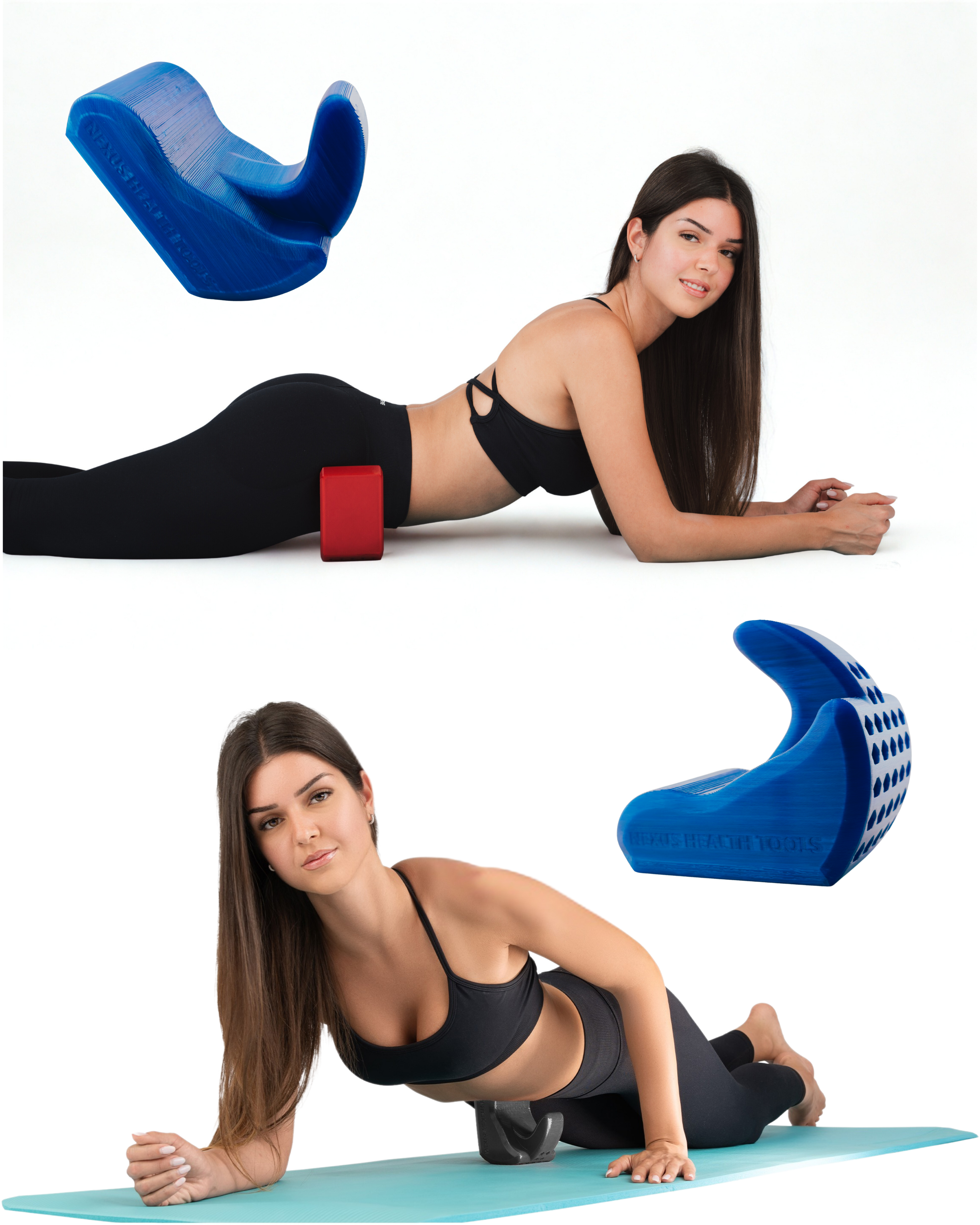
Core Nexus
Two muscle-specific tips: a broad tip for the psoas, a narrow angled tip for the iliacus.
📖 In This Article
 The Hip Hook reaches the iliacus but cannot reach the psoas. Core Nexus has a tip shaped for each muscle.
This article compares the Hip Hook by Aletha Health with the Core Nexus by Nexus Health Tools.
Both products are sold for hip-mobility use. Neither can diagnose the cause of lower-back or hip symptoms.
The main design difference is the tip set. The Hip Hook has one narrow, iliacus-oriented tip. It reaches the iliacus but cannot reach the psoas.
Two Muscles, Two Locations, Two Shapes
The psoas and iliacus start in two different places. This article looks at the shape and size of each product tip.
| Psoas | Iliacus | |
|---|---|---|
| Location | Deep in the abdomen, along the lumbar spine | Inside the bowl of the hip bone |
| Design target used here | Wider contact area for a psoas-oriented tip | Narrow, angled contact for an iliacus-oriented tip |
| Safety note | Do not use this comparison as instructions for deep belly pressure | Do not dig inside the hip-bone rim |
One narrow tip cannot give both kinds of contact. The Hip Hook can reach the iliacus. It cannot make enough contact to reach the psoas.
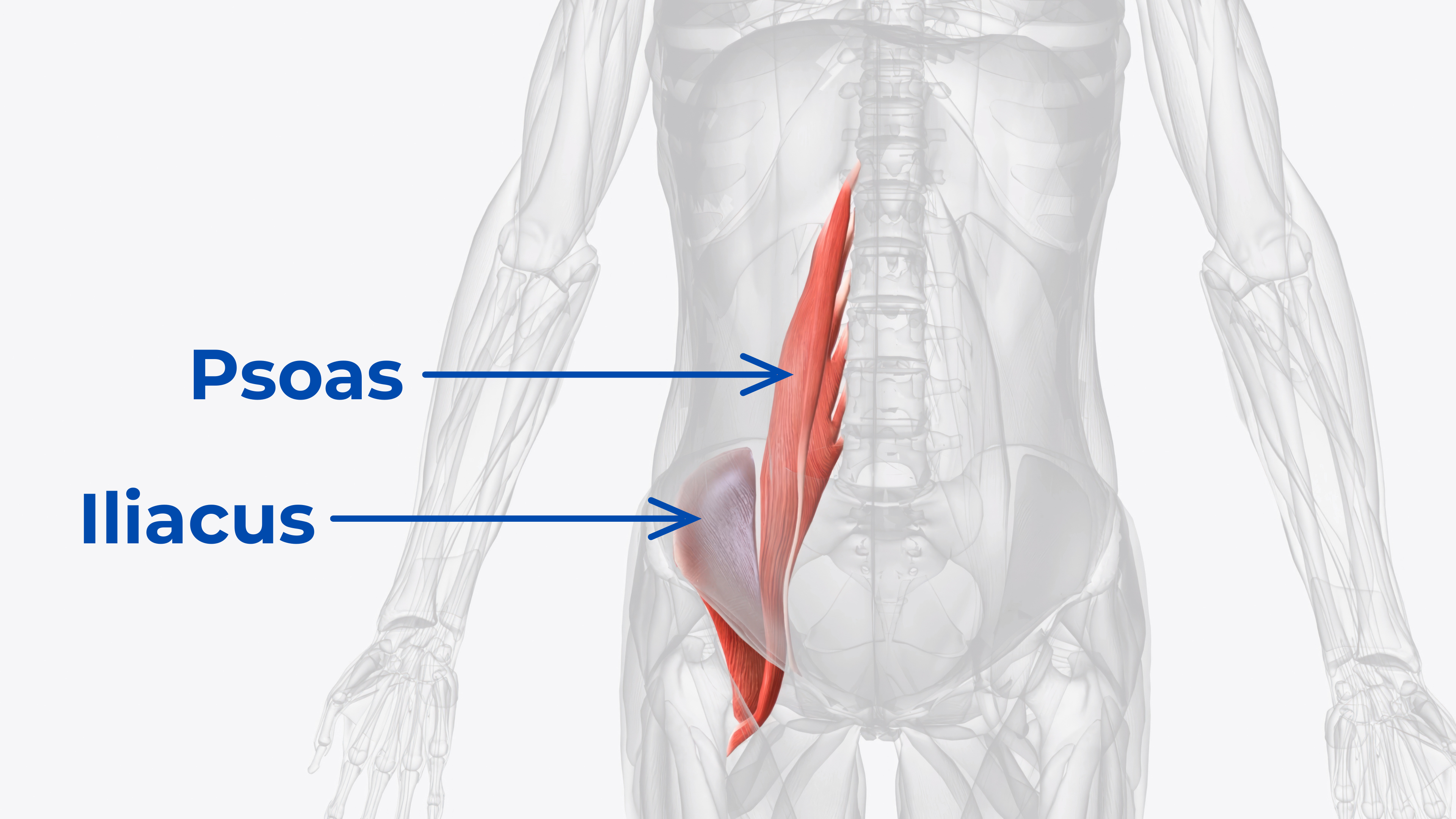 The psoas begins along the lower spine. The iliacus begins inside the hip bone. Core Nexus uses a different tip geometry for each design target.
What the Hip Hook Reaches
The Hip Hook has one narrow, angled tip made for the iliacus location. Its shape follows the curve near the inner hip bone.
That narrow tip reaches the iliacus. It cannot reach the psoas because its contact area is too small. This does not mean each user will feel the same thing.
Bottom line: the Hip Hook offers one iliacus-oriented tip. Core Nexus offers two different tip shapes. A symptom cannot tell you which muscle needs attention.
Compare Narrow and Broad Tip Shapes
Core Nexus: Two Muscles, Two Tips
Core Nexus was built around that exact limit. It has two different tips, one per muscle:
- Wider tip — NHT's psoas-oriented design, with a broader contact area.
- Curved tip — shaped to follow the curve of the hip bone and reach the iliacus inside the pelvic wall. It is narrower and angled differently than the psoas tip, because it is reaching a different muscle in a different spot.
Core Nexus features two distinct tips — a broader surface for the psoas and a contoured tip for the iliacus — both rotating independently on the base.
Both tips can rotate on the base. This lets the tip angle change with body position without resetting the whole tool. It is a use feature, not proof of a better health result.
The rotating tips can change angle as the body moves.
See the Two-Tip Design in Action
Why Both Muscles Come Up Together
The psoas attaches along the spine. The iliacus attaches to the pelvis. They meet at the same spot on the thigh bone and work as one unit, the iliopsoas.
The pair joins near the thigh bone. Each starts in a different place. NHT uses a different tip shape for each area:
- The psoas starts along the lower spine. NHT uses a wide psoas tip.
- The iliacus starts inside the hip bone. NHT uses a thin, angled iliacus tip.
What any of that does for a given person varies, and no tool should promise a result. Front-of-hip tightness has more than one possible cause, and anything painful or persistent belongs with a qualified clinician.
The Two-Tool Problem
Here is the basic product choice:
If you want both tip shapes, the Hip Hook gives you only the narrow iliacus shape. A wide-tip product would be a second buy.
A Hip Hook plus a separate broad-tip tool means two purchases and two products to store and learn. Core Nexus places both shapes on one base.
Core Nexus carries both shapes on one tool: a broad tip for the psoas, a narrow angled tip for the iliacus.
Head-to-Head Comparison
| Feature | Core Nexus | Hip Hook |
|---|---|---|
| Reaches the psoas | ✔︎ | ✘︎ |
| Reaches the iliacus | ✔︎ | ✔︎ |
| Muscle-specific tip geometry | ✔︎ (dual-tip) | ✘︎ (single tip) |
| Self-rotating base | ✔︎ | ✘︎ |
| Tip shape for each of the two muscles | ✔︎ | ✘︎ |
| Made in USA | ✔︎ | ✔︎ |
| Lifetime warranty | ✔︎ | ✘︎ |
Comparison scope: these two tools, on the design factors listed. Warranty and policy terms change — check each maker's current terms before you buy.
See the Hip Hook and Core Nexus in the REACH Test
The REACH Test uses a true-to-scale hip model. Pick a muscle, place a tool, and see whether its tip gets to the target.
- Hip Hook: reaches the iliacus but cannot reach the psoas.
- Core Nexus: reaches the iliacus and psoas with two different tips.
 REACH Test visualization. Anatomy model: Z-Anatomy, CC BY-SA 4.0. Illustrative, not medical advice.
Check the reach before you choose.
The test compares physical reach. It does not diagnose pain or promise a health result.
Who May Prefer Each Design
Hip Hook May Be Right If:
- You want one thin tip made for the iliacus area
- You already own a separate broad-tip tool
- You prefer the Hip Hook's design and instructions
Core Nexus Is Built For:
- People who want two distinct contact shapes on one base
- People who want rotating rather than fixed tip angles
- People who want to compare the warranty, material, and build
- People who prefer one product rather than two separate tools
The Bottom Line
The Hip Hook reaches the iliacus but cannot reach the psoas. Core Nexus reaches both with two different tip shapes on one base.
The answer depends on which contact geometry and product features you want. It does not depend on diagnosing yourself from a symptom.
Want two different tip shapes on one base?
Core Nexus comes with 30-day returns and a lifetime warranty against manufacturing flaws.

Frequently Asked Questions
No. The Hip Hook reaches the iliacus, but its narrow tip and small contact area cannot reach the psoas. The REACH Test shows this on a true-to-scale hip model.
The two muscles begin in different locations. NHT uses a broader contact area for its psoas-oriented tip and a narrow, curved shape for its iliacus-oriented tip. Do not treat this design explanation as instructions for deep belly or inner-rim pressure.
That depends on what you want to reach. A Hip Hook is built for the iliacus. If you also want broad contact on the psoas, that is a different tip shape, and Core Nexus carries both on one tool. Whether you need that is your call — this article compares reach, not results.
Core Nexus has two tip shapes and a base that turns. It is made from TPU. Its warranty covers factory flaws for life. The Hip Hook has one thin iliacus tip that cannot reach the psoas.
The Core Nexus tips can turn as body position changes. The Hip Hook tip is fixed. This is a product feature. It is not the same as clinical care, and it does not promise a result.
The Hip Hook had a $199 first-party list price when this package was checked, though a current offer may be lower. It has one narrow iliacus-oriented tip. If you want two distinct contact geometries on one base, that is where Core Nexus differs.
That varies from person to person, and no tool should promise a result. Tip shape limits what a tool can reach; it does not decide how your body responds. Keep sessions gentle, let comfort guide you, and see a clinician for anything painful or persistent.

Nexus Health Tools designs hip mobility tools in the USA and writes simple guides about hips, posture, and daily movement. This article compares our own product with another maker's.