


Hip Clicking: Possible Sources and Warning Signs
Hip clicking and snapping can come from a tendon outside the joint or from something inside the joint. A sound alone cannot identify the source or show whether it is harmless. Pain, catching, locking, swelling, weakness, loss of movement, or a recent injury are reasons to get checked.
In This Article
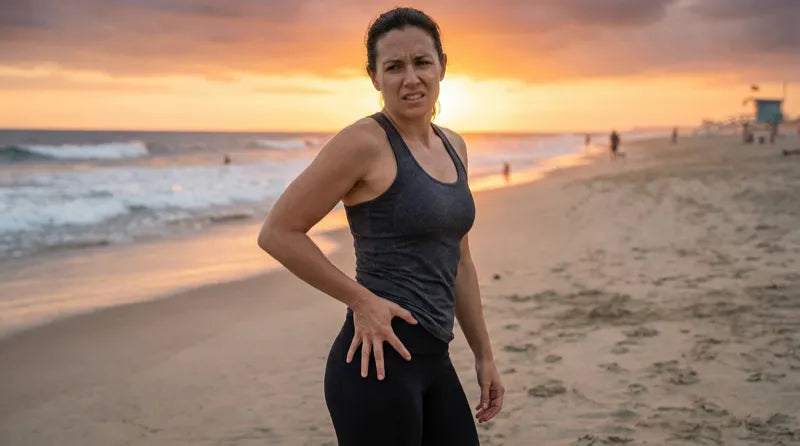 Hip sounds have more than one possible source. The sound or location alone cannot identify it.
Your hip clicks. Maybe it snaps when you walk, pops when you stand up, or grinds when you turn your leg.
And you are wondering: is this a problem?
The sound alone cannot answer that question. Pain, catching, locking, swelling, weakness, lost movement, or a recent injury add important context.
Here is a plain-language look at three broad categories. It is not a home diagnosis.
The Three Types of Hip Clicking
Not all hip clicks are the same. Clinicians usually sort them into three groups:
1. External Snapping
What you feel: A snap or pop on the outside of the hip. Usually when you walk, stand up, or swing the leg.
Possible source: A tendon or the IT band may move over the bony area on the outside of the hip. An exam is needed to confirm the source.
If it hurts, worsens, or limits movement, have it looked at.
2. Internal Snapping (The Psoas Click)
What you feel: A snap or pop in the front of the hip, deep in the groin. It often shows up when the hip goes from bent to straight. Standing up from a chair. Or pulling the knee to your chest and then straightening it.
Possible source: The iliopsoas tendon may move over a bony area as the hip bends and straightens. Other causes can feel similar.
The location does not prove iliopsoas tension. Painful or catching clicks deserve a check.
3. Intra-Articular (Inside the Joint)
What you feel: A catching, locking, or grinding inside the hip joint. It may come with tension, stiffness, or a feeling that the hip is not steady.
Possible source: A problem inside the joint is one possibility, but symptoms alone cannot confirm it.
What to do: If the hip catches, locks, gives way, loses movement, or hurts, see a qualified clinician.
What Symptoms Can and Cannot Tell You
| Feature | External possibility | Internal possibility | Joint possibility |
|---|---|---|---|
| Location | Outside of hip | Front of hip / groin | Deep in joint |
| When it happens | Walking, leg swinging | Standing up, hip extension | Random, during rotation |
| tension level | May be painless or painful | May be painless or painful | May be painless or painful |
| Reproducible? | May repeat | May repeat | May repeat or vary |
| Worsening? | A change over time does not identify the source | ||
| What to do | Seek an assessment for pain, catching, locking, weakness, swelling, lost movement, or a recent injury | ||
The key question: does the clicking hurt?
- Painless clicking may still have more than one source. Watch for change and avoid forcing the motion.
- Painful clicking that catches or locks should be assessed.
- New clicking after an injury → see a doctor either way.
Where the Iliopsoas Fits
The iliopsoas is made of the psoas and iliacus. Their shared tendon passes across the front of the hip. In some cases, that tendon can be involved in internal snapping.
This anatomy explains one possibility. It does not show that sitting made the tendon tight, that the sound will become painful, or that self-care will stop the click.
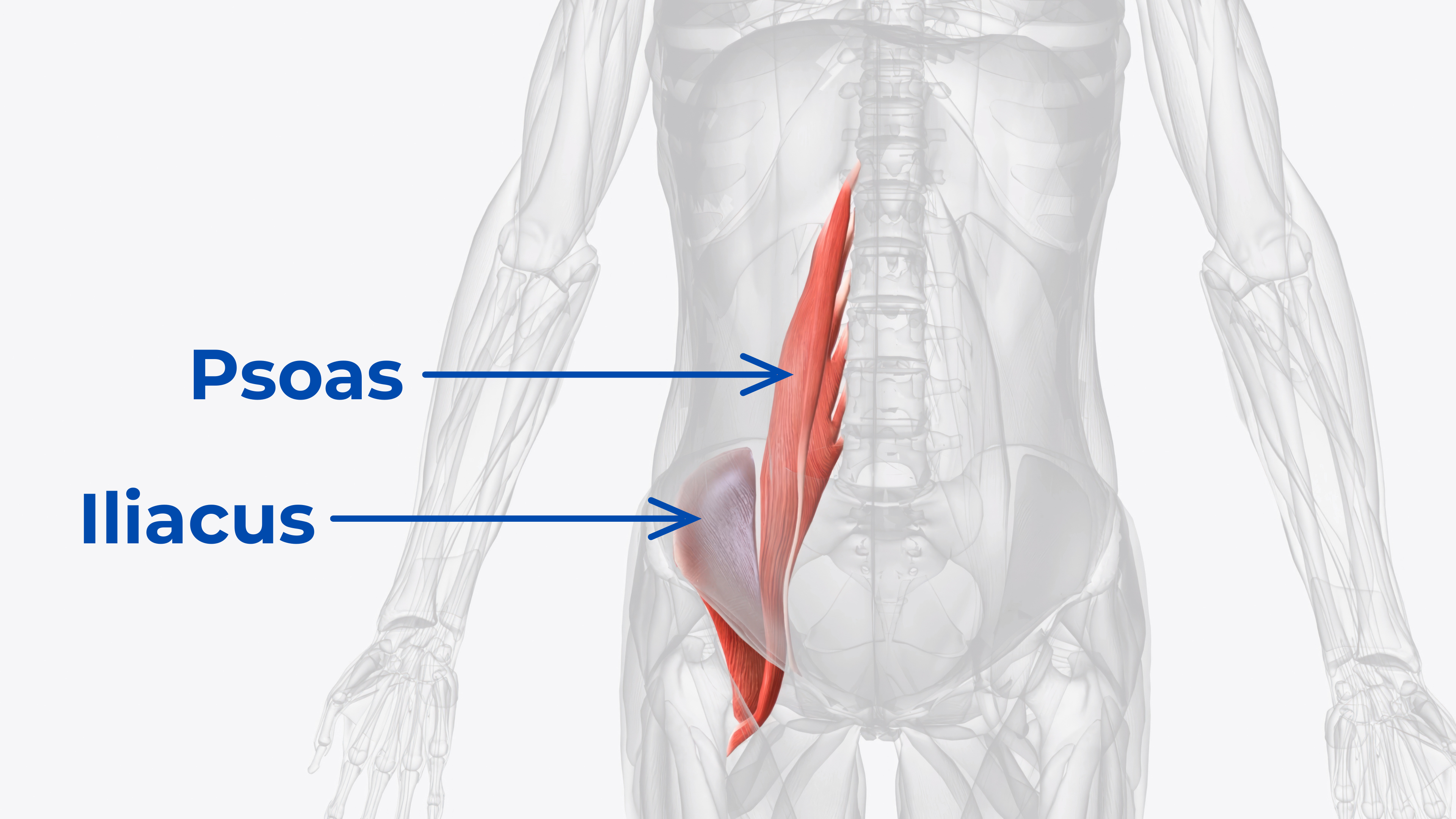 The psoas (spine to femur) and the iliacus (hip bone to femur) work together as the iliopsoas.
Gentle Comfort Options
If the click is painless and a clinician has not told you to limit movement, easy walking or a gentle hip stretch may feel comfortable.
Do not press deeply into the belly or inside the hip bone to chase the sound. Stop if movement causes pain, tingling, spreading symptoms, catching, or locking.
Complementary Exercises
Clamshells: one optional hip-strength exercise. Use a comfortable range.
Dead bugs: one optional trunk-control exercise. Move slowly and stop if it hurts.
Standing hip circles: a gentle way to explore a comfortable range. Do not force a click.
When to See a Doctor
See a medical professional if:
- The clicking comes with tension that limits what you can do
- The hip catches or locks, sticking partway through a motion
- There is swelling around the hip
- The clicking started after an injury or a fall
- You are slowly losing range of motion
- The clicking comes with weakness, and the leg gives way
The Bottom Line
Hip clicking has more than one possible source. A front-of-hip click can involve the iliopsoas tendon, but the sound or location alone cannot confirm it.
Do not chase a diagnosis or click with pressure. Use comfortable movement, and get warning signs assessed.
Frequently Asked Questions
A sound alone cannot show whether it is harmless. Clicking with pain, catching, locking, swelling, weakness, lost movement, or a recent injury should be checked.
Standing takes the hip from bent toward straight. The iliopsoas tendon is one possible source of a front-of-hip snap, but other causes can feel similar. An exam is needed to identify it.
A gentle stretch may feel comfortable, but there is no promised effect on clicking. Do not force the motion. Painful, worsening, catching, or locking clicks should be assessed.
The psoas starts on the lower spine. The iliacus starts inside the hip bone. They join into one tendon near the thigh bone, which is why they are called the iliopsoas. Do not use belly or inner-rim pressure to try to separate them.
See a clinician if the clicking hurts, catches, locks, comes with swelling or weakness, limits movement, or started after an injury. Ask for help whenever the symptom worries you.

Nexus Health Tools publishes plain-language guides about hips, posture, and everyday movement.