


Anterior Pelvic Tilt: 5 Possible Clues
Anterior pelvic tilt means the pelvis tips forward and the lower back arches more deeply. It is a common posture pattern, not a disease. Long sitting may feed it. Tight hip flexors — including the psoas and the iliacus — can be one factor. Strength, habits, and how much you move matter too. This guide covers five common signs and simple habits that may help.
In This Article

What Anterior Pelvic Tilt Is
Picture the pelvis as a bowl of water. When you stand tall, the bowl sits level. In anterior pelvic tilt, the bowl tips forward, as if pouring water out the front.
A forward tilt can change how the lower back, belly, and seat look from the side. These visual clues do not prove that a muscle is short or that anything is wrong.
This is a posture pattern, not a disease. A small tilt is common and can be part of normal standing posture. It becomes worth your attention when the tilt grows strong and starts to show up as tightness in the hips and lower back.
It is also common in people who sit most of the day. No single muscle explains it. But one group worth knowing about is the hip flexors.
The 5 Signs of Anterior Pelvic Tilt
No single sign proves the pattern. But when several of these show up together, the pelvis may be part of the story.
1. A deeper arch in the lower back
The curve above the belt line looks and feels deeper than it used to. The belly can drift forward even on a lean frame. A clinician can tell you whether the curve is outside the normal range — posture alone does not prove a problem.
2. A front of the hip that often feels tight
The hip crease feels short and blocked, most of all after long sitting. Standing up straight feels like something in front is holding you back.
3. Hamstrings that often feel tight
Hamstrings can feel tight for many reasons. Posture may be one factor, but the feeling alone cannot tell you whether a muscle is short or what is causing it.
4. A sway-back look when standing
The seat pushes back, the ribs flare forward, and the body stacks in an S-shape instead of a straight line. Friends may say you stand with your bottom out.
5. A lower back that tires fast when standing
Some people notice lower-back fatigue while standing. Many things can cause that feeling, so posture alone is not a diagnosis.
The Hip Flexors and the Pelvis
The hip flexors are a group of muscles, not one. Two deep ones — the psoas major and the iliacus — join into a unit called the iliopsoas. Other muscles, like the rectus femoris and the sartorius, help flex the hip too.
The psoas runs from the lower spine, deep inside the trunk, down to the top of the thigh bone. Its position changes as the hip bends and straightens.
The iliacus lines the inside of the hip bone. It works together with the psoas whenever you bend at the hip.
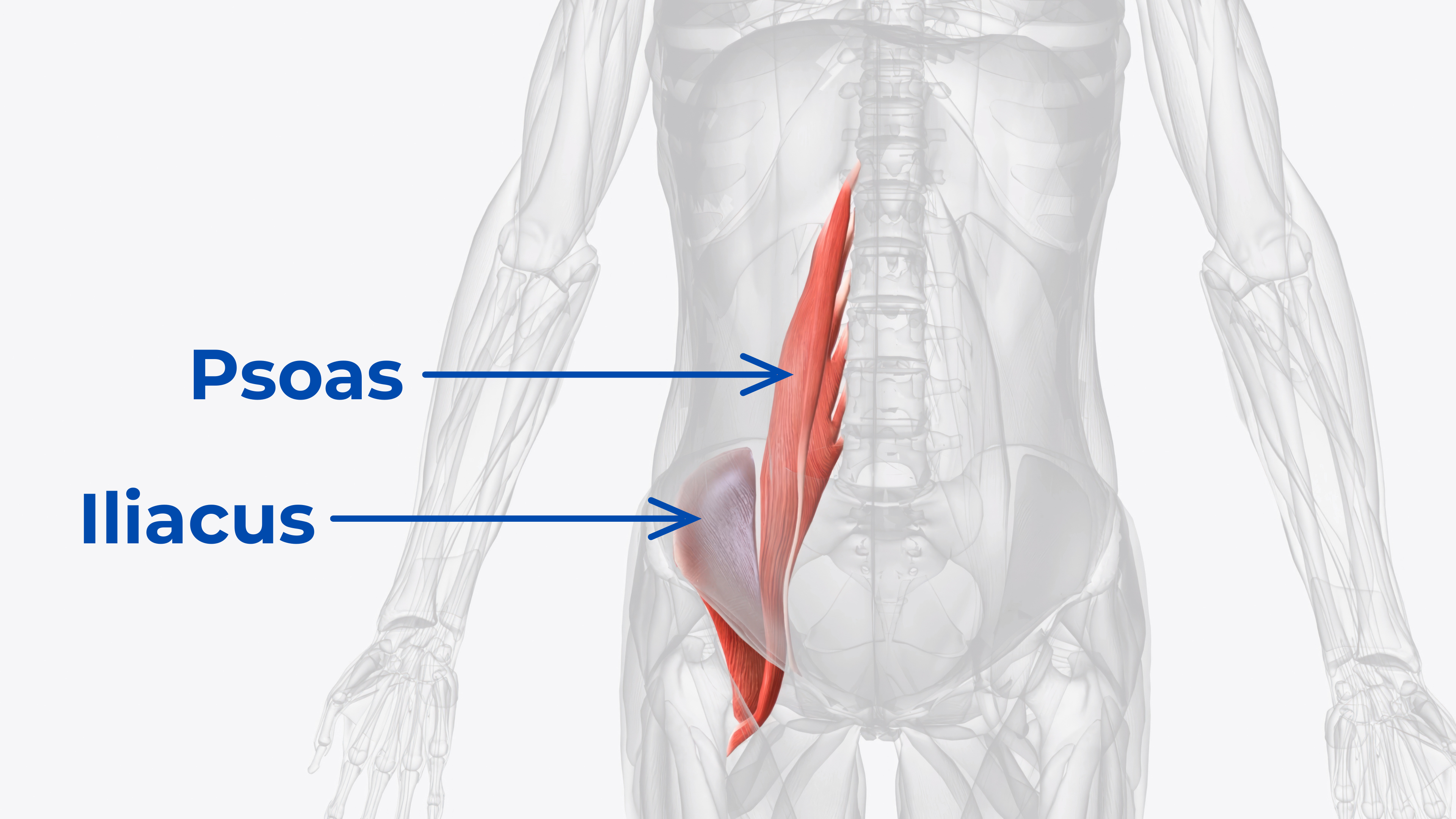 The psoas runs along the lumbar spine. The iliacus lines the inside of the hip bone. Together they form the iliopsoas, one of several muscles that flex the hip.
Hip flexor tightness is one factor among several — strength, habits, and daily movement all play a part.
Where Stretching Fits
Stretching feels like the obvious answer. Lunge, hold, breathe. A gentle hip flexor stretch can feel good, and it may help.
On its own, though, it is only one piece. Posture patterns tend to reflect a whole day of habits, not one tight spot.
That is why a broader mix tends to make more sense: move more often, build strength, and use gentle mobility work — the same simple plan covered in our companion guide on how to fix anterior pelvic tilt in five simple steps.
What Actually Helps
There is no single fix that works for everyone. These habits may help:
- Break up sitting. Stand, walk, or change position when it feels comfortable
- Do gentle mobility work. Easy hip flexor stretches and light movement, within comfort
- Build strength. General hip and trunk strength can support comfortable movement
- Get help when it lingers. If discomfort persists or you are unsure, a clinician can assess what is going on
Small, steady habits beat big occasional efforts here. And no posture pattern needs to be fixed overnight.
The Bottom Line
Anterior pelvic tilt means the pelvis tips forward. Possible clues include a deeper lower-back curve, a tight-feeling hip crease, tight-feeling hamstrings, a sway-back stance, or a back that tires while standing. None of these clues proves the pattern or its cause.
The hip flexors — including the psoas and the iliacus — may be one part of the pattern. Strength, habits, and sitting time matter too.
Move more. Stretch gently. Build strength. And if the pattern comes with discomfort that lingers, talk with a clinician. Posture patterns are common, and they are workable.
Frequently Asked Questions
It is a posture pattern, not a disease. A small tilt is common — many bodies stand with some. It earns attention when the tilt is strong and shows up together with a tight hip crease, a deep lower-back arch, or a back that tires fast when standing.
There is usually more than one factor. Strength, movement habits, normal body shape, and time spent in different positions can all play a part. No single muscle or habit explains every case.
Movement, gentle mobility work, and strength may help some people feel or move better. A change in posture is not promised. If you have symptoms or questions about your posture, a clinician can assess you.
Hamstrings can feel tight for many reasons. A posture photo or a tight feeling cannot show the length of the muscle or identify the cause. Use gentle movement, and ask a clinician if the feeling persists.
They can appear together, but that does not prove that the tilt caused the pain. Some people with a visible tilt feel fine, and back discomfort has many possible causes.

Nexus Health Tools publishes plain-language guides about hips, posture, and everyday movement.
This article is for learning only and is not medical advice. If symptoms stick around, see a qualified provider.